
OUTA: SA cannot protect whistleblowers only on paper
OUTA | 2 September 2026
#TheyHaveNames exposes the human cost of corruption as OUTA calls for preventative protection under the proposed new whistleblower law.
- OUTA says whistleblower protection must be preventative, not reactive.
- OUTA does not support the Protected Disclosures Bill, 2026 in its current form
- #TheyHaveNames tells the story of the families left behind
- OUTA wants murder investigations to go beyond the hitmen to those who ordered and financed the killings
South Africa cannot keep asking people to expose corruption while failing to protect them when they become targets.
As government moves to overhaul the country’s whistleblower protection laws, OUTA says the experiences of murdered whistleblowers and the families they leave behind show why protection cannot begin only after retaliation, intimidation or threats have already occurred.
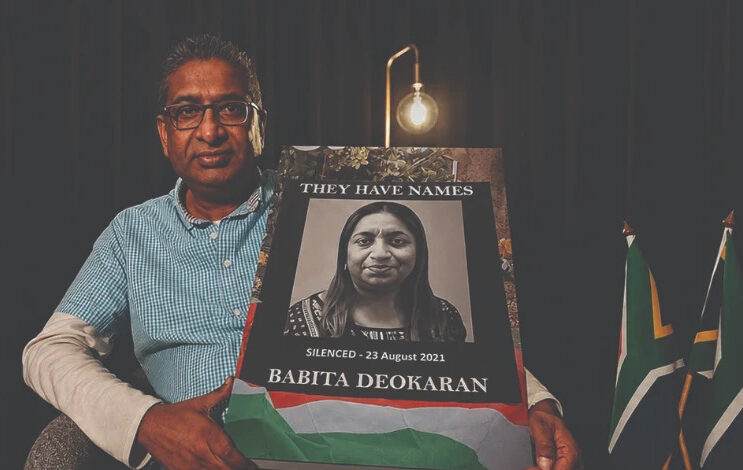
Through its #TheyHaveNames campaign, OUTA is documenting the stories of people who were threatened, attacked or killed in connection with exposing or confronting corruption, and the families left behind.
They include Babita Deokaran, Martha Mani Rantsofu, Mpho Mafole, Armand Swart, Sindiso Magaqa and Marius van der Merwe, with further cases being investigated.
“They were never just whistleblowers or names in a corruption story. They were mothers, fathers, daughters, sons, brothers, sisters, husbands and wives. They had families, ambitions and futures,” says Ibanathi Ngcobo, OUTA Supporter Engagement Manager.
“#TheyHaveNames exists because we refuse to allow their lives to become another statistic in South Africa’s corruption crisis.
“We want South Africans to ask a simple question: what kind of country asks people to stand up for the public purse, but fails to stand up for them?”
The next phase of #TheyHaveNames goes beyond the circumstances of the killings and into the lives of the families left behind.
OUTA is interviewing family members of murdered whistleblowers to document what happens after the headlines disappear: the trauma of a violent death, children growing up without a parent, families losing an income, financial responsibilities shifting overnight, and questions about justice that remain unanswered.
The first interviews include the families of Babita Deokaran and Mpho Mafole, with further families forming part of the series.
Deokaran, an acting chief director of financial accounting in the Gauteng Department of Health, raised concerns about suspicious payments and procurement at Tembisa Hospital. Six men were convicted in connection with her murder in 2023, but those who allegedly ordered her killing have still not been brought to justice.
Five years after her murder, investigations into the corruption she exposed continue. In late August 2026, the Hawks arrested a suspect linked to an alleged R635 million Tembisa Hospital procurement fraud scheme, a stark reminder of the scale of the wrongdoing Deokaran had tried to expose.
Rantsofu, an Emfuleni municipal finance official, was killed in Vanderbijlpark on 30 March 2026. Police have since confirmed that the R16 million vehicle tender investigation arose from one of several complaints Rantsofu lodged before her murder. A former Emfuleni fleet manager has subsequently been arrested and faces fraud and corruption charges. The investigation into Rantsofu’s murder continues.
For OUTA, arresting those who allegedly carry out these killings is not enough. Investigators must establish who commissioned the killings, who financed them, who benefited from them, and what corruption was being protected.
These cases come as government proposes the Protected Disclosures Bill, 2026, aimed at overhauling South Africa’s whistleblower protection framework.
Government has proposed the Protected Disclosures Bill, 2026, aimed at overhauling and strengthening South Africa’s existing whistleblower protection framework.
OUTA welcomes several proposed improvements, including broader protection for people making disclosures, protection for related persons, stronger confidentiality provisions, clearer reporting procedures and provision for legal, financial and psychosocial support.
But OUTA does not support the Bill in its current form.
“The Bill is a welcome acknowledgement that South Africa’s current whistleblower protection system is not good enough, but changing the law will mean very little if protection still arrives too late,” says Adv Stefanie Fick, OUTA Executive Director: Accountability and Public Governance.
“Whistleblowers should not first have to lose their jobs, their income or their safety before the system responds. We need a mechanism that can act when a threat emerges, not simply offer remedies once the damage has already been done.”
“That is why OUTA is calling for an independent, properly resourced Whistleblower Protection and Integrity Authority, with the power and capacity to provide rapid protection and hold institutions accountable when they fail those who expose wrongdoing.”
OUTA is particularly concerned about the lack of sufficiently immediate emergency protection for high-risk whistleblowers, weak enforcement against institutions that fail to protect them, inadequate practical financial and psychosocial support, cybersecurity and confidentiality risks around the proposed centralised disclosures database, and insufficient recognition of the role of civil society organisations and investigative journalists when official channels fail.
OUTA also believes the proposed oversight model is inadequate for the scale of the threat facing whistleblowers.
OUTA is calling for an independent, properly resourced Whistleblower Protection and Integrity Authority with the power to:
• receive and assess disclosures;
• coordinate investigations;
• provide rapid protection for people facing credible threats;
• support high-risk whistleblowers and their families;
• protect the confidentiality and digital security of whistleblowers; and
• hold institutions accountable when they fail to protect people who expose wrongdoing.
OUTA also supports the establishment of a dedicated fund for whistleblowers who lose their livelihoods or face threats because they acted in the public interest.
High-risk whistleblowers should be able to access relocation assistance, temporary income support, psychosocial care, legal assistance and physical and digital security when needed.
“A right that exists only on paper is not protection,” says Fick.
OUTA is also calling on law enforcement agencies to pursue the full chain of accountability when whistleblowers are murdered.
In Mpho Mafole’s case, a man has been arrested and charged with his murder, while police have issued a warrant for another suspect. Mafole had compiled a forensic report concerning corruption in Ekurhuleni’s R1.8 billion chemical toilet tender shortly before his death.
In Martha Rantsofu’s case, the Political Killings Task Team is investigating her murder, while separate corruption investigations have progressed following complaints she made.
These investigations cannot end with the people who allegedly pulled the trigger.
The public deserves to know who ordered these killings, who paid for them, who benefited from the silence and whether the corruption the victims exposed was properly investigated.
OUTA will continue standing alongside the families of murdered whistleblowers, including through its Bridge Brigade presence at whistleblower court proceedings, while demanding meaningful progress from SAPS, the NPA and other authorities.
Families deserve answers.
They deserve justice.
And South Africans deserve to know whether the corruption these whistleblowers risked their lives exposing has actually been stopped and prosecuted.
The state cannot ask people to defend the public purse while leaving them to defend themselves.
The Protected Disclosures Bill provides South Africa with an opportunity to change that.
But we do not simply need a better whistleblowing law. We need a whistleblower protection system that works when someone’s livelihood, family or life is on the line.
OUTA will continue engaging with Parliament and government to push for legislation that provides real, enforceable and preventative protection.
Read on the OUTA website here.